Original: $4,017.65
-65%$4,017.65
$1,406.18The Story
Antique Japanese Wakizashi, signed Uta no Kunitsugu — NBTHK Hozon Tōken
Etchū Uta school · Early Edo period (Shintō), c. Kan'ei–Kanbun era
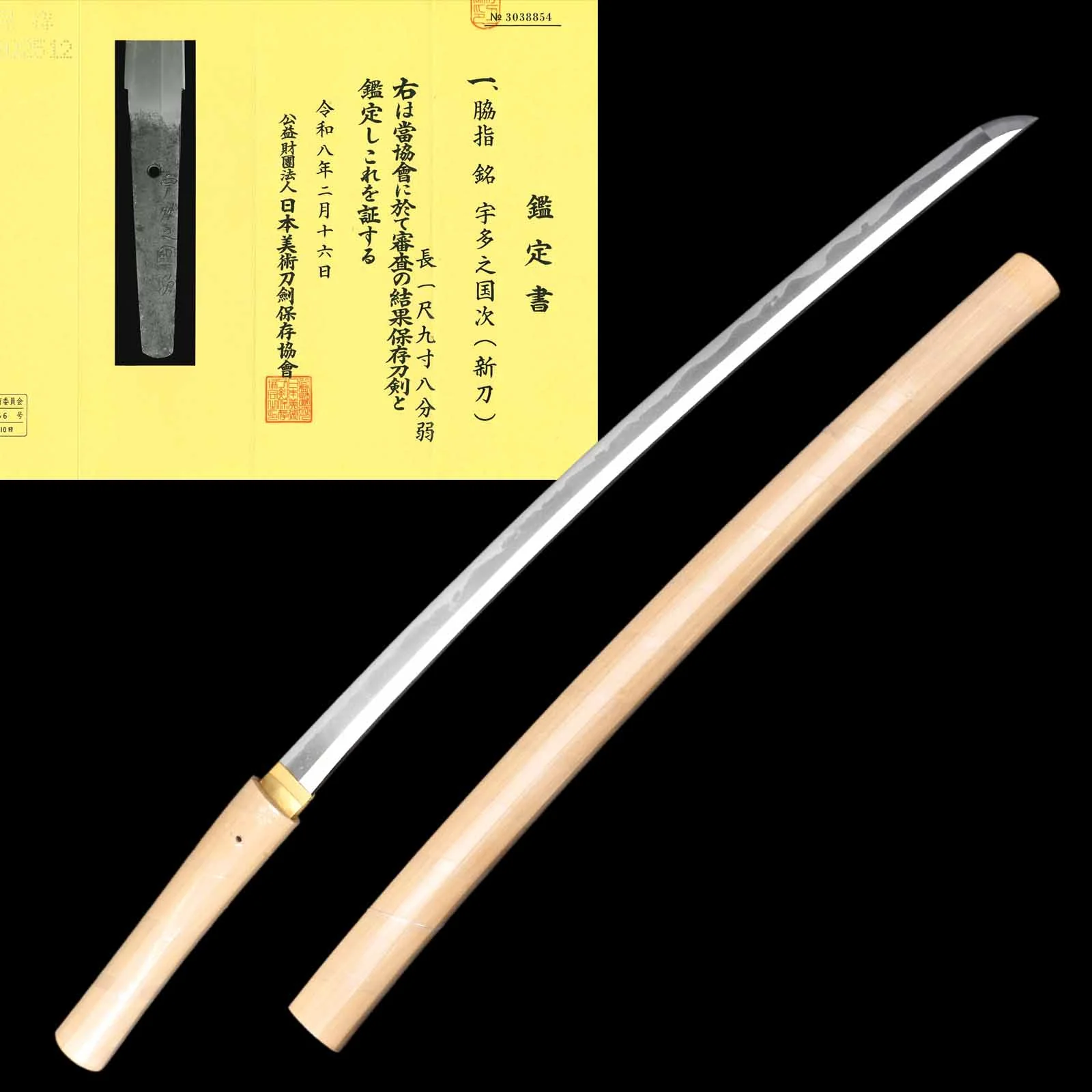
Accompanied by an NBTHK Hozon Tōken ("Sword Worthy of Preservation") certificate.
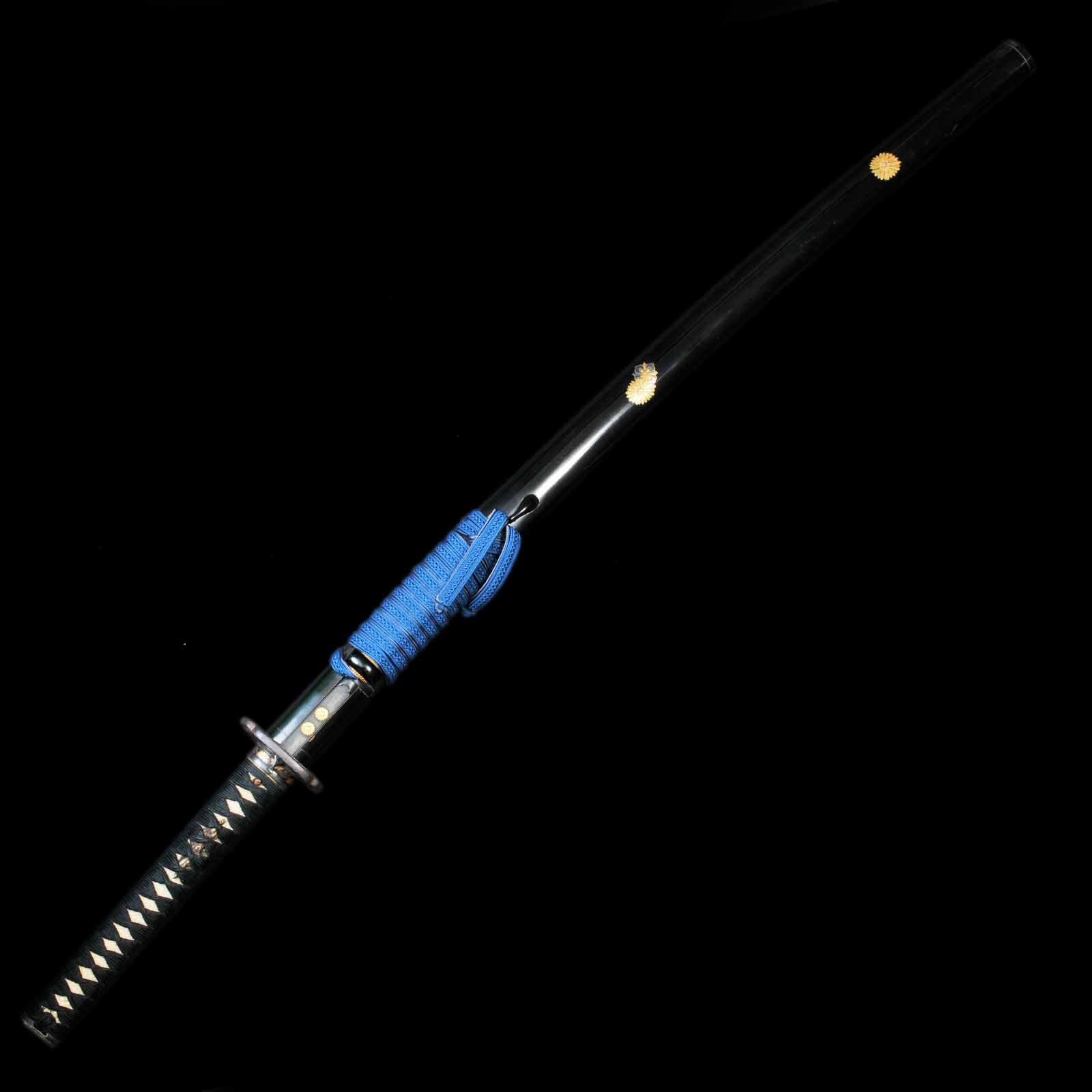
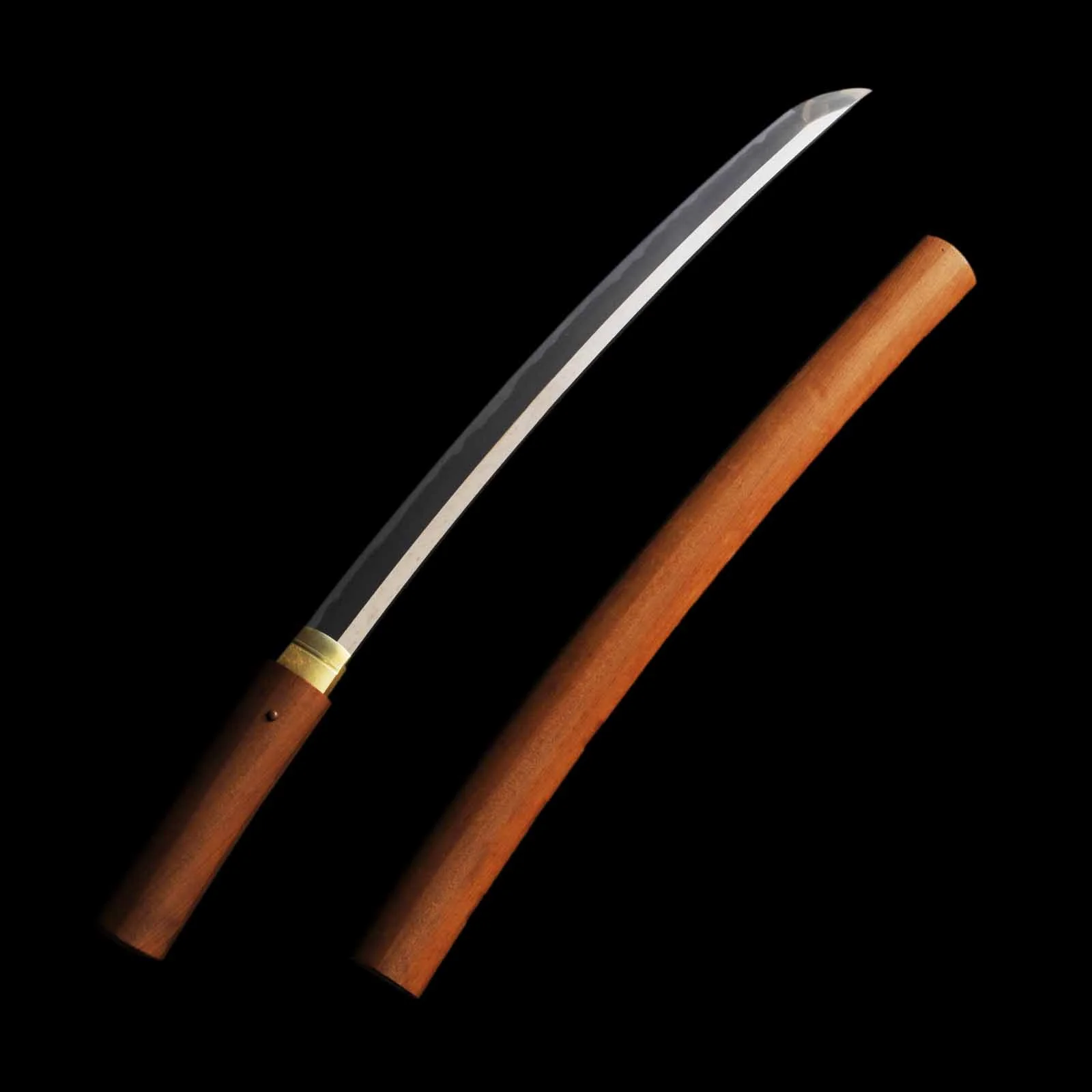
This large wakizashi bears the signature Uta no Kunitsugu (宇多之国次) and is accompanied by an NBTHK Hozon Tōken certificate, which papers it as a genuine work of the Uta school of Etchū province dating to the Shintō ("new sword") era — the certificate itself notes the "Shintō" classification, placing this blade in the early Edo period, around the Kan'ei to Kanbun eras (mid-17th century).
The Uta school of Etchū
The Uta school traces to a smith remembered as Ko-nyūdō Kunimitsu, who in the late Kamakura period moved from Uda district in Yamato province to Etchū (present-day Toyama), settling at Gousho Mikkaichi. He signed Uta to record his home district, and the name passed to the school he founded. From the Nanbokuchō period through the Muromachi era and on into the early Edo period, generations of Uta smiths — Kunifusa, Kunimune, Kunitsugu and others — worked in Etchū, making the school one of the great enduring swordmaking lineages of the northern provinces. The name Kunitsugu itself was carried by several smiths across these generations; this blade belongs to the school's Shintō-era work.
Workmanship and condition
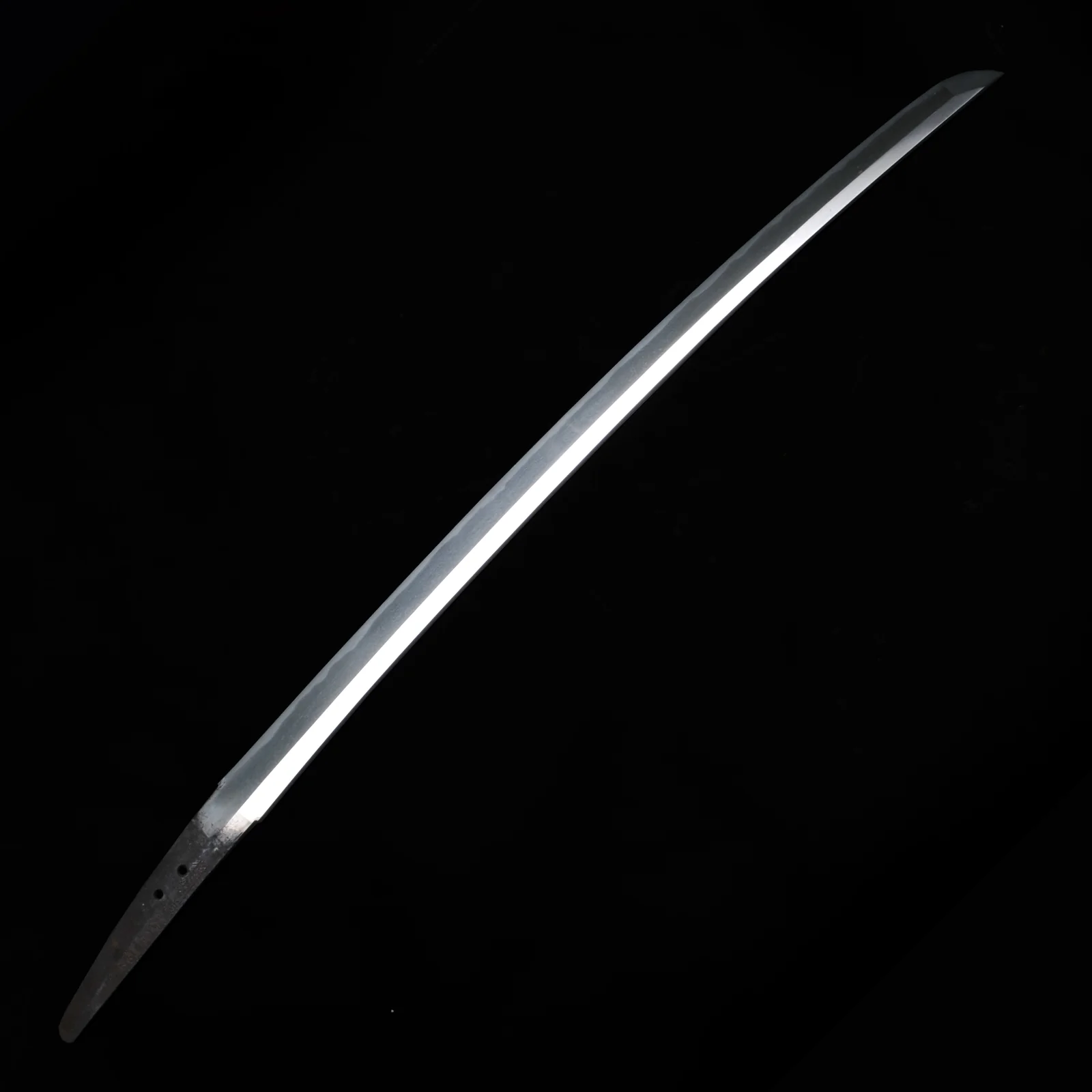
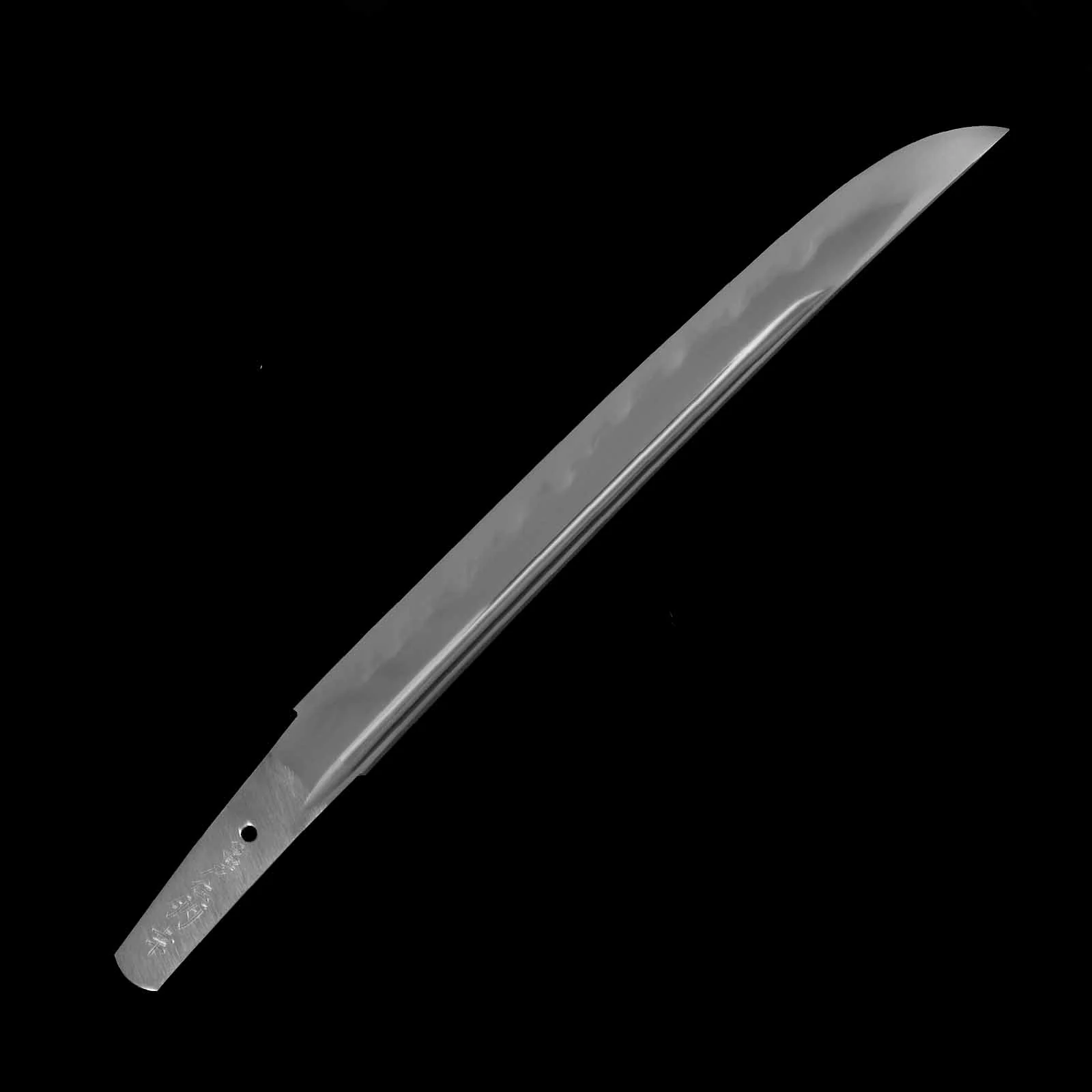
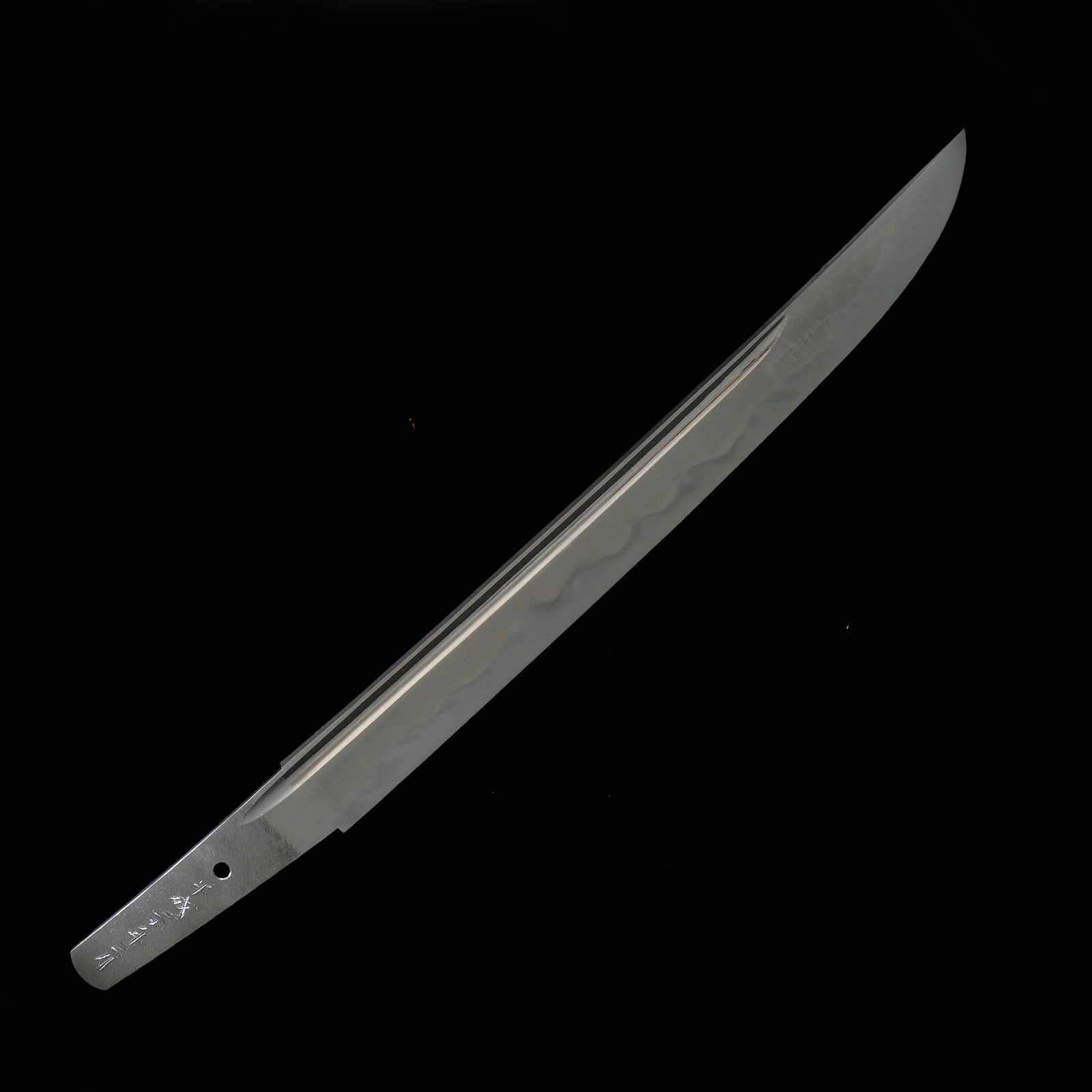
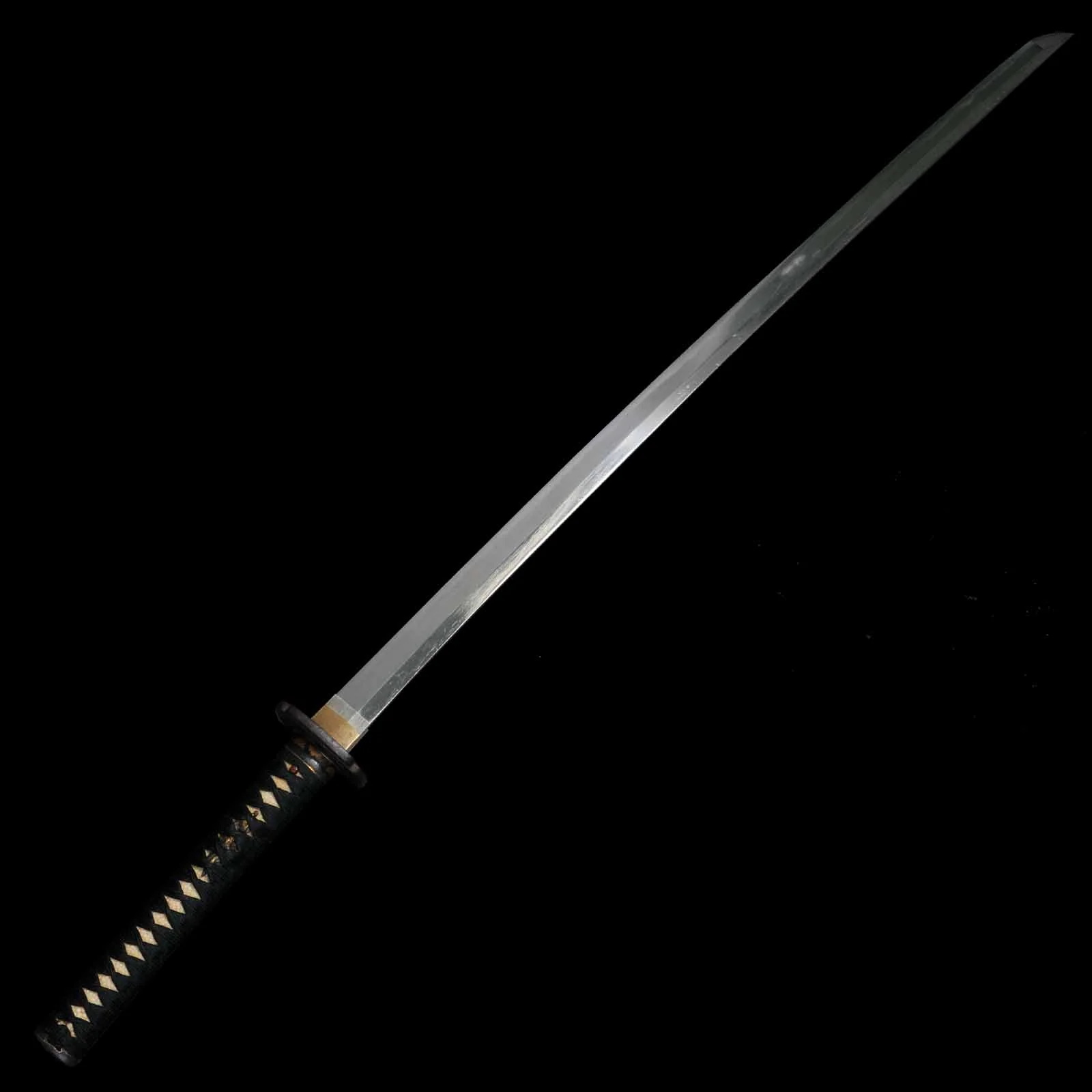
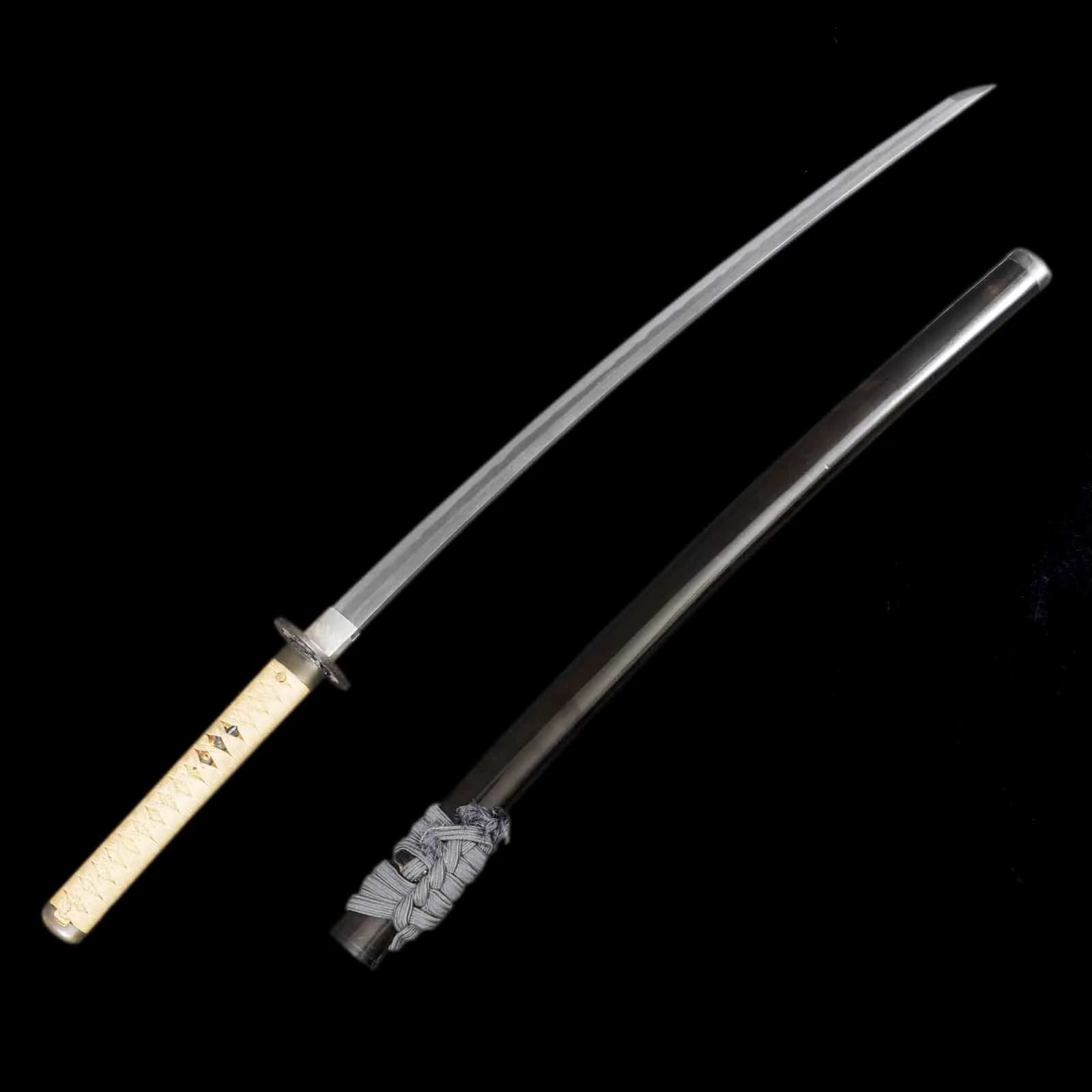
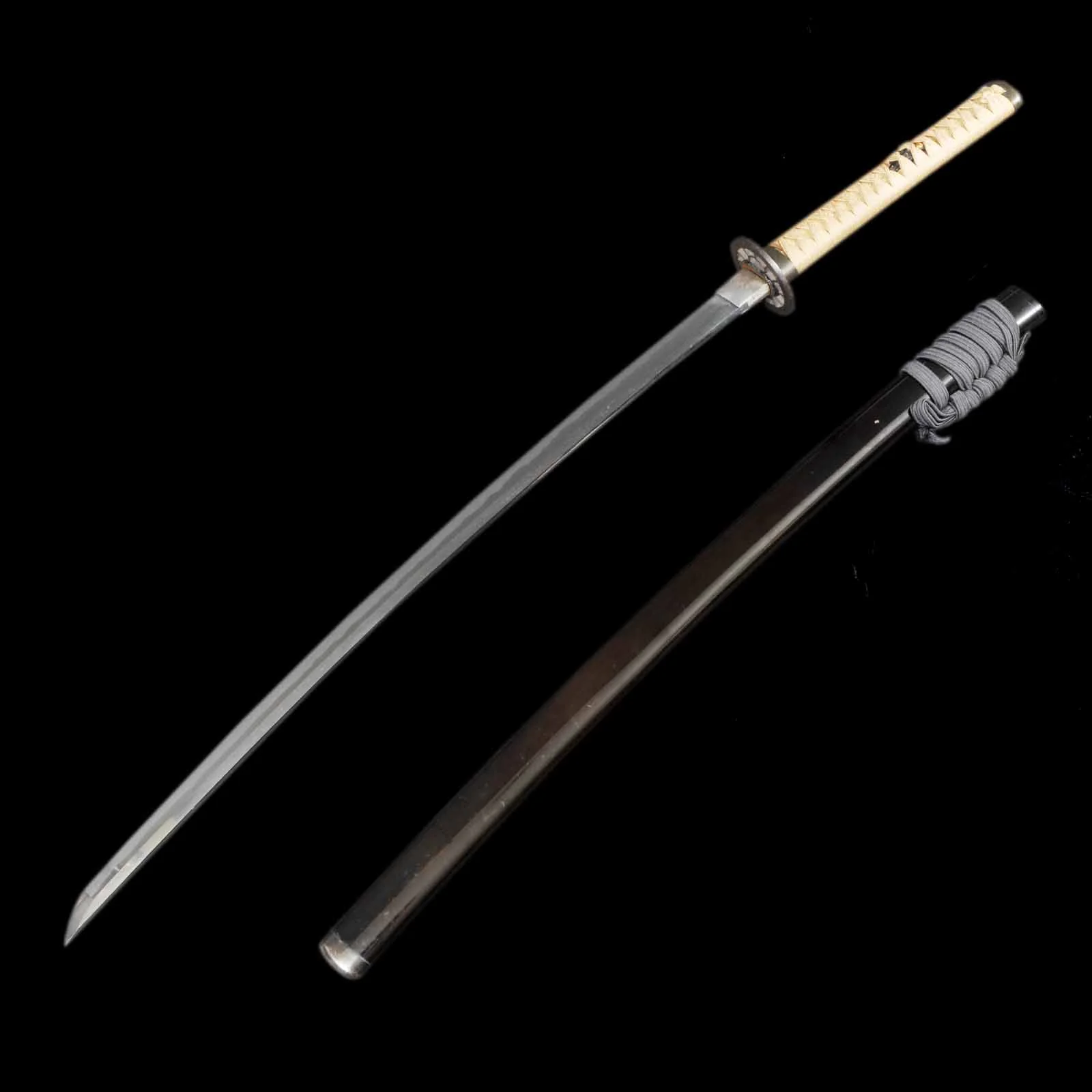
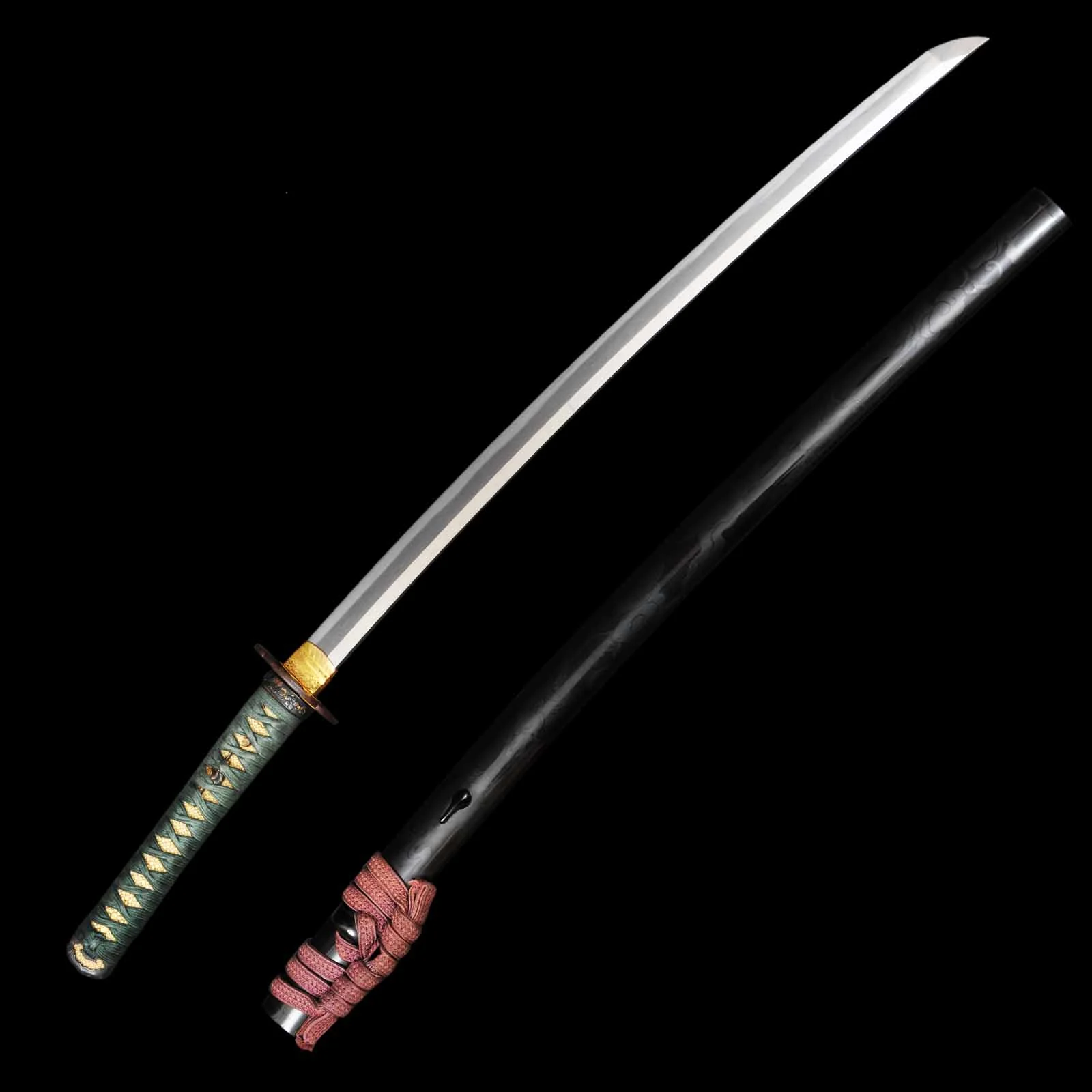
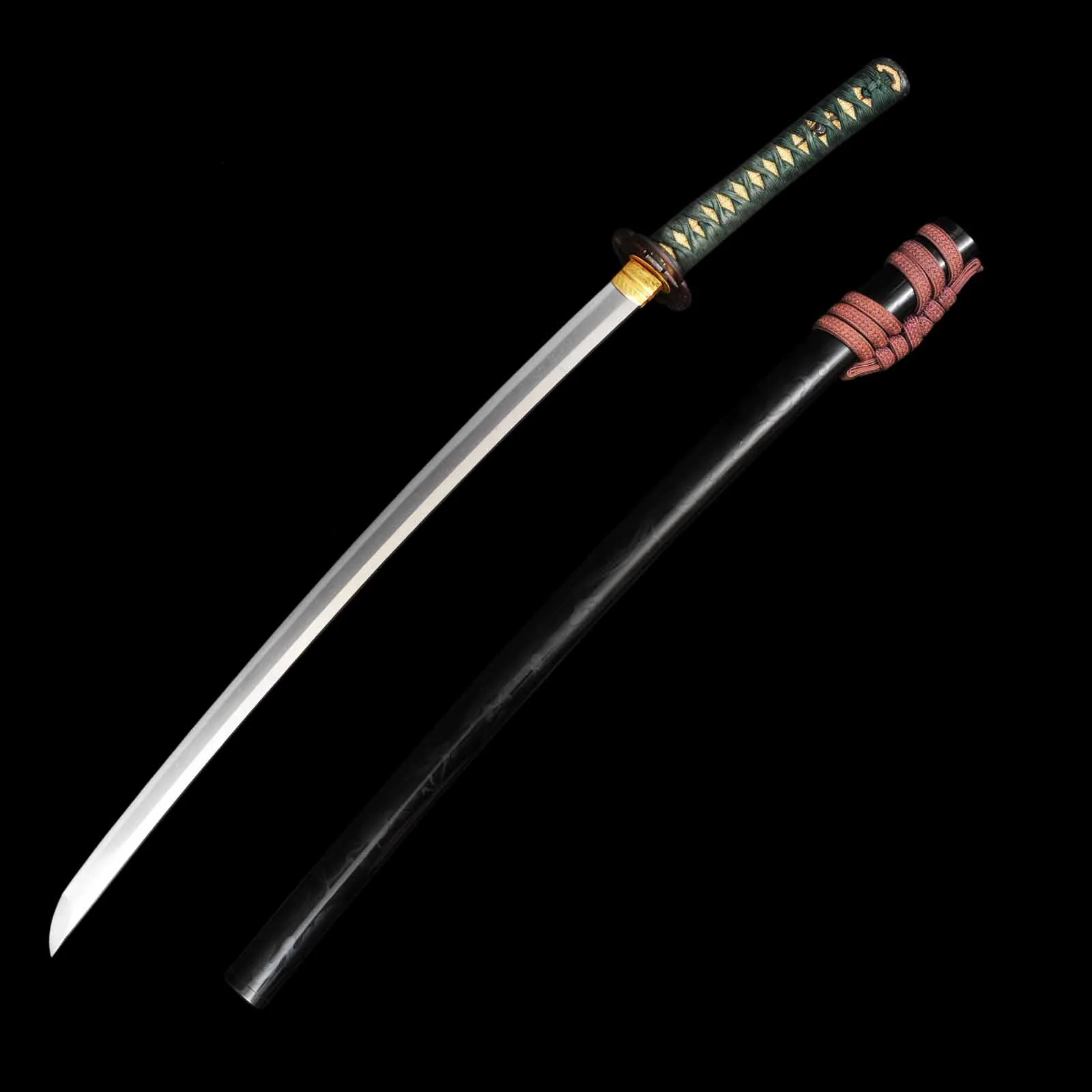
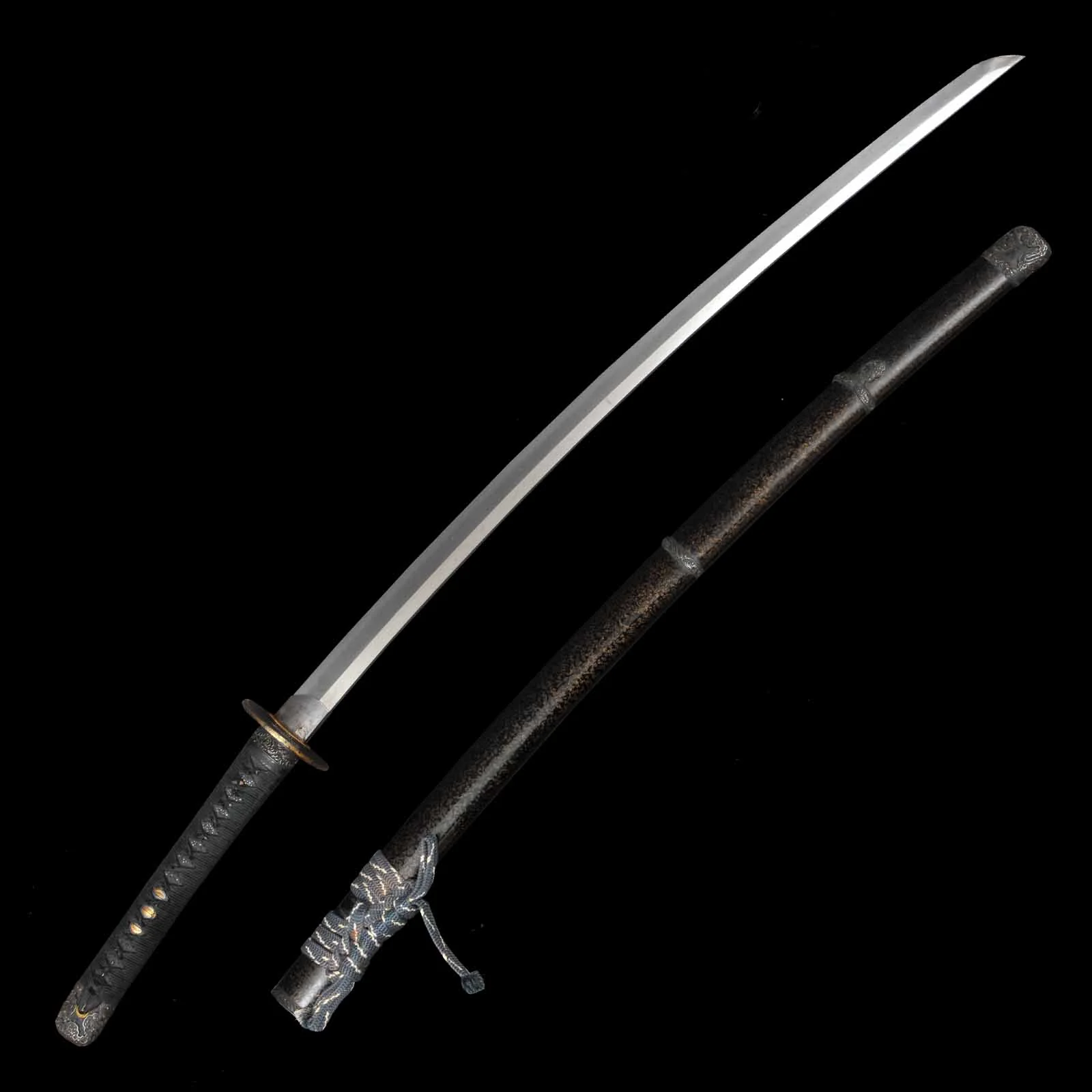
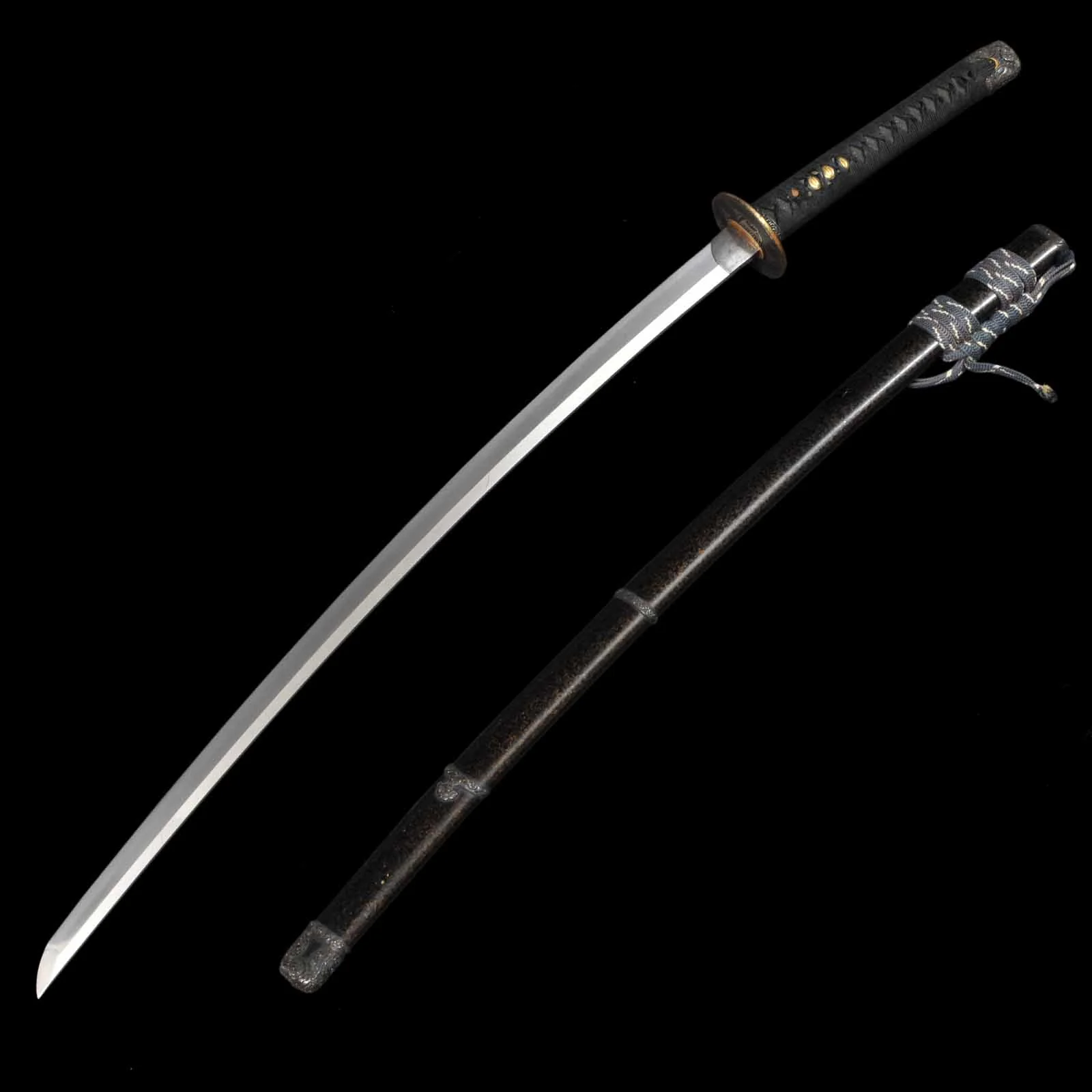
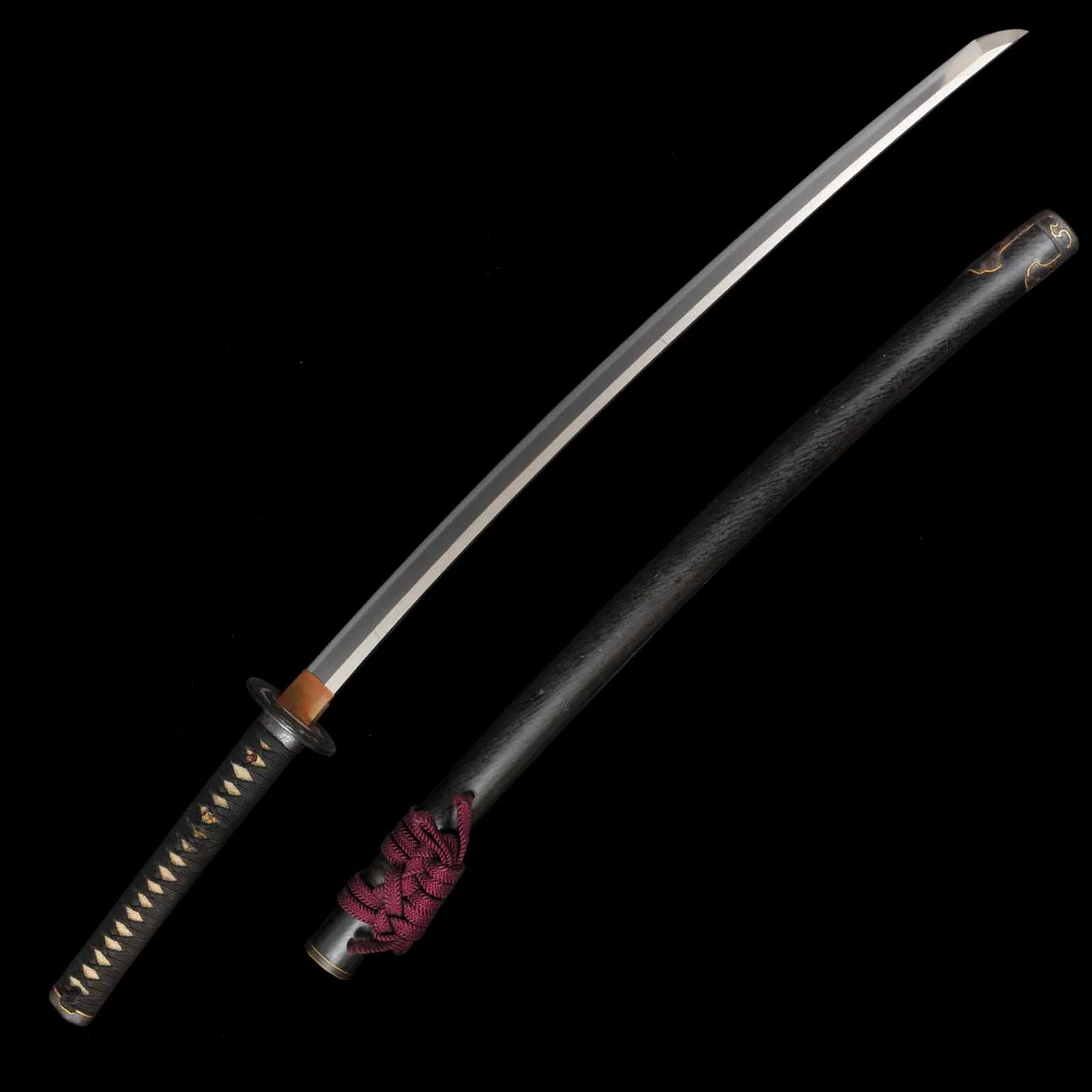
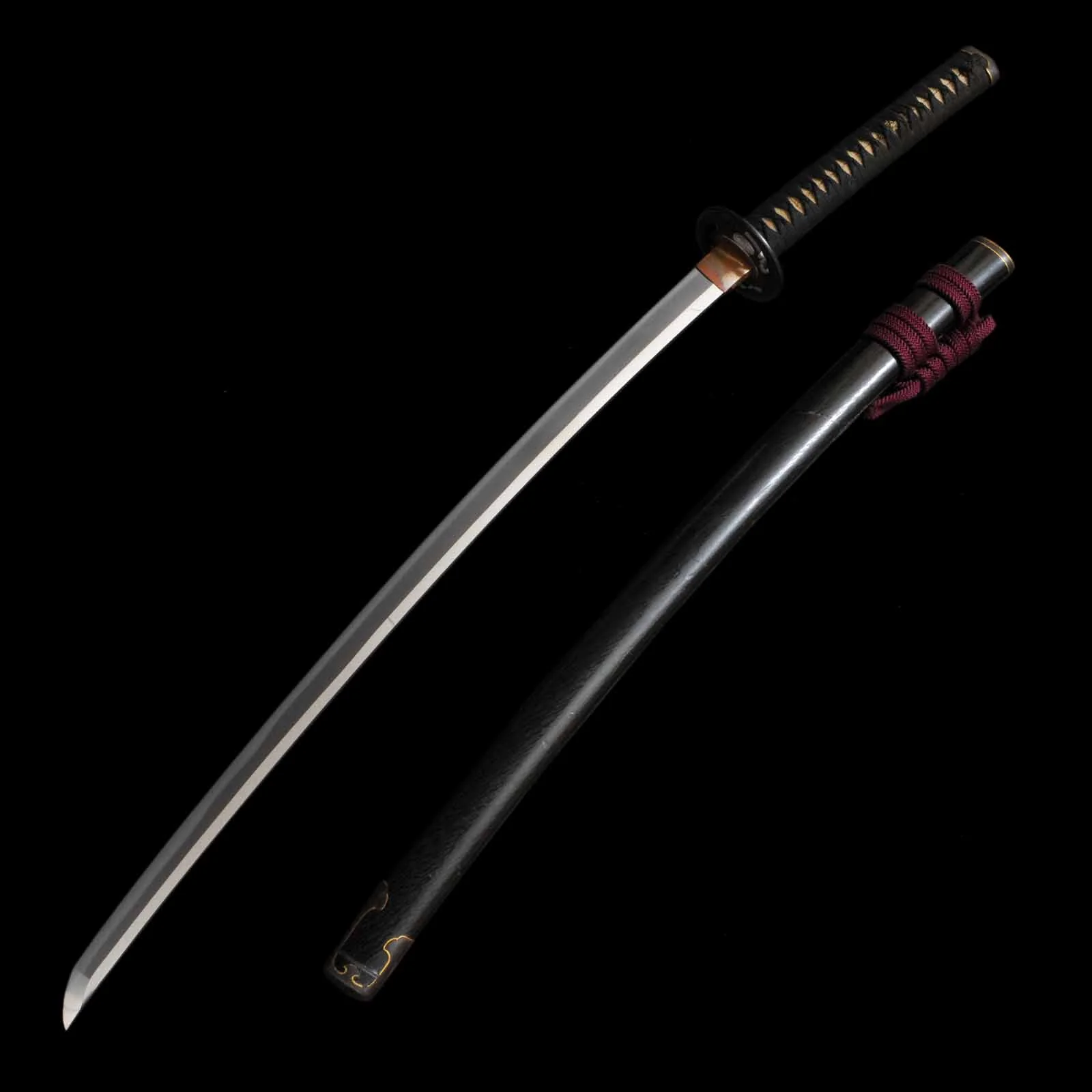
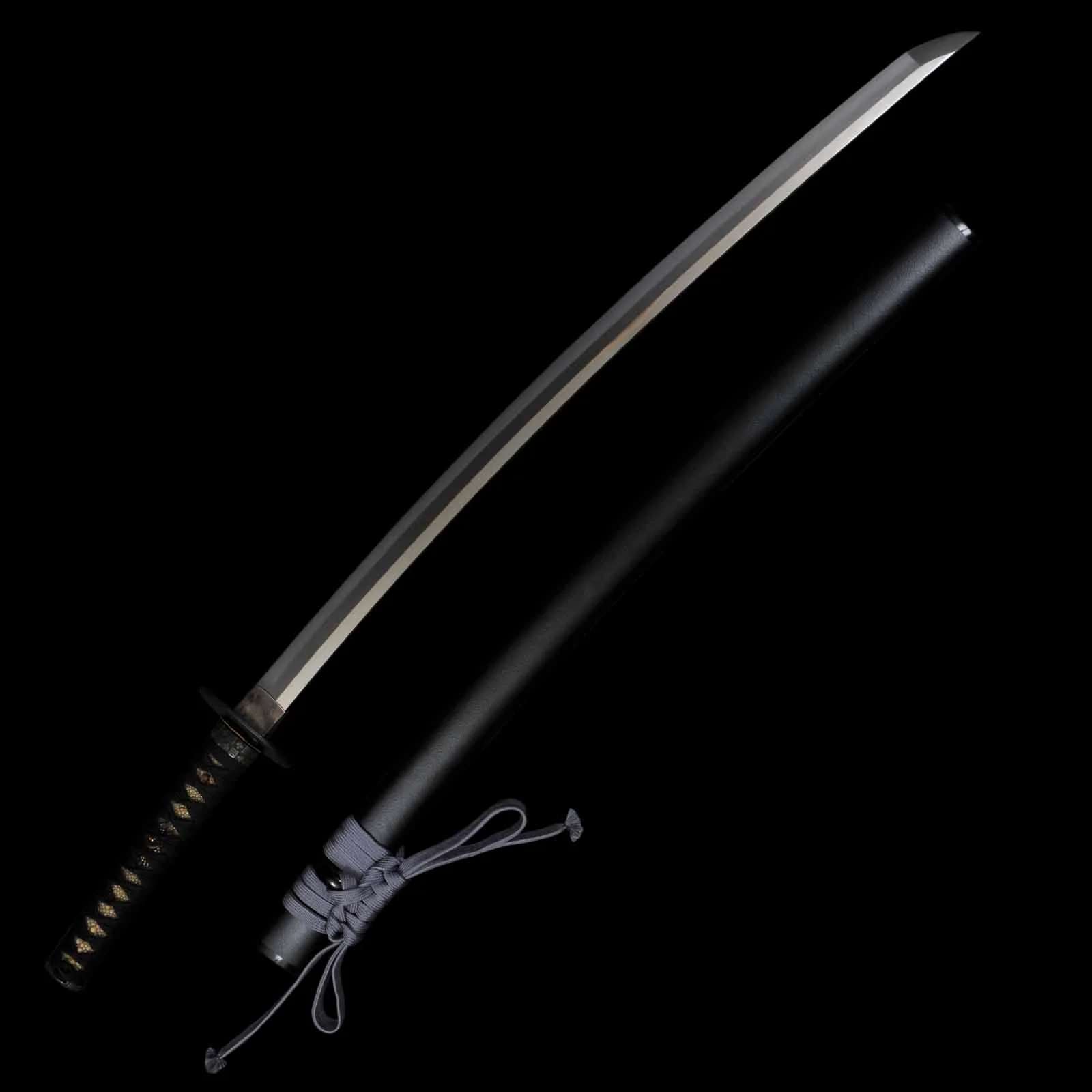
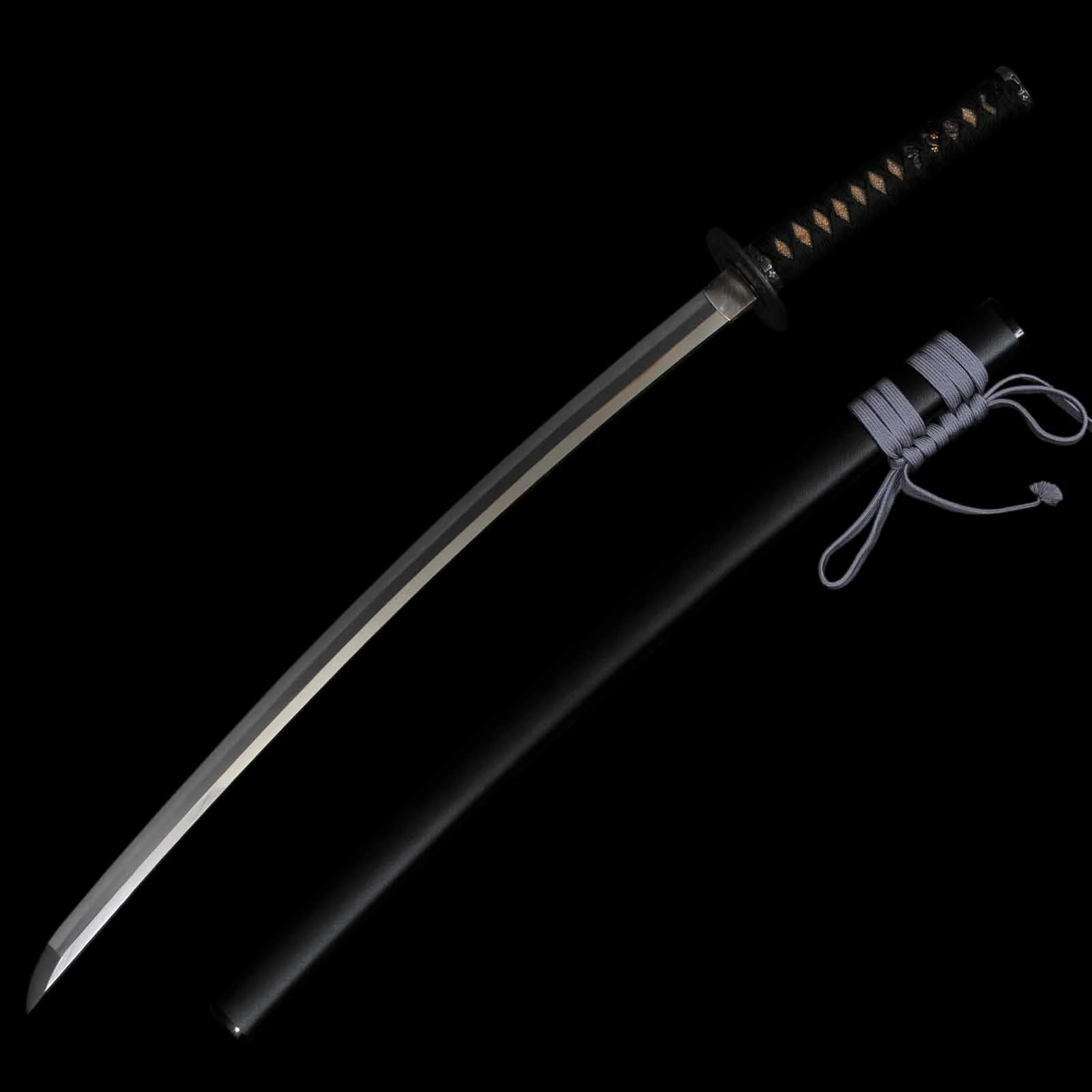
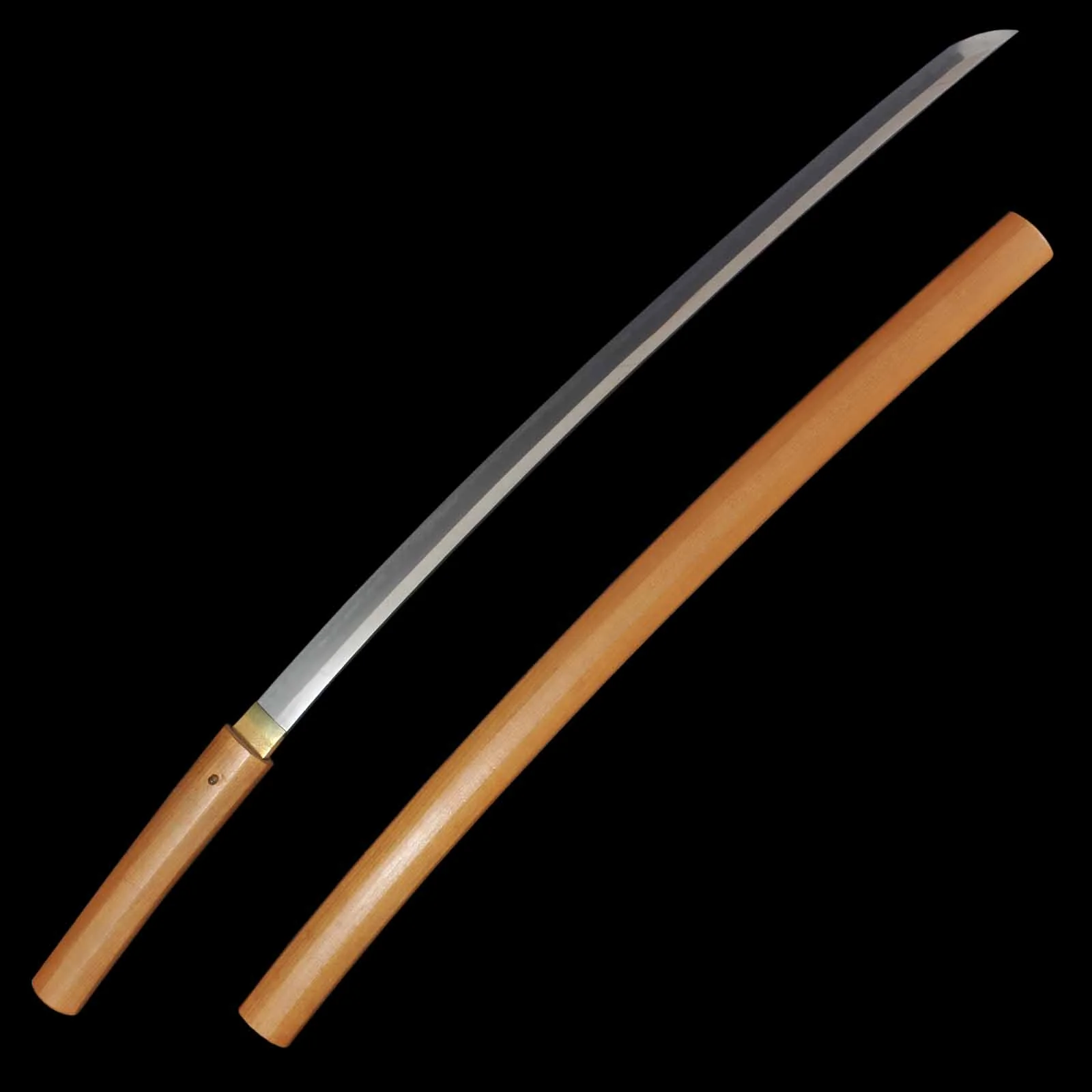
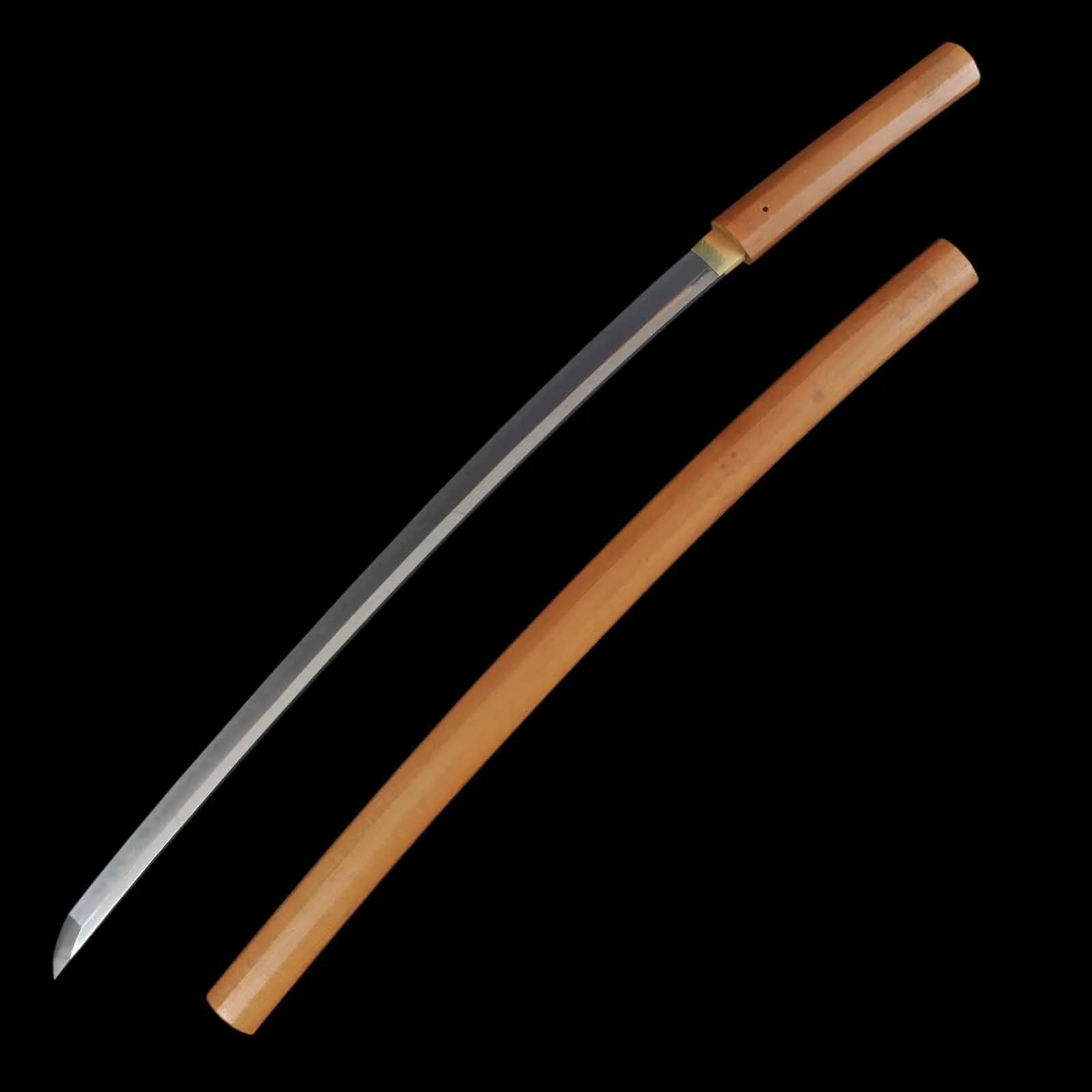
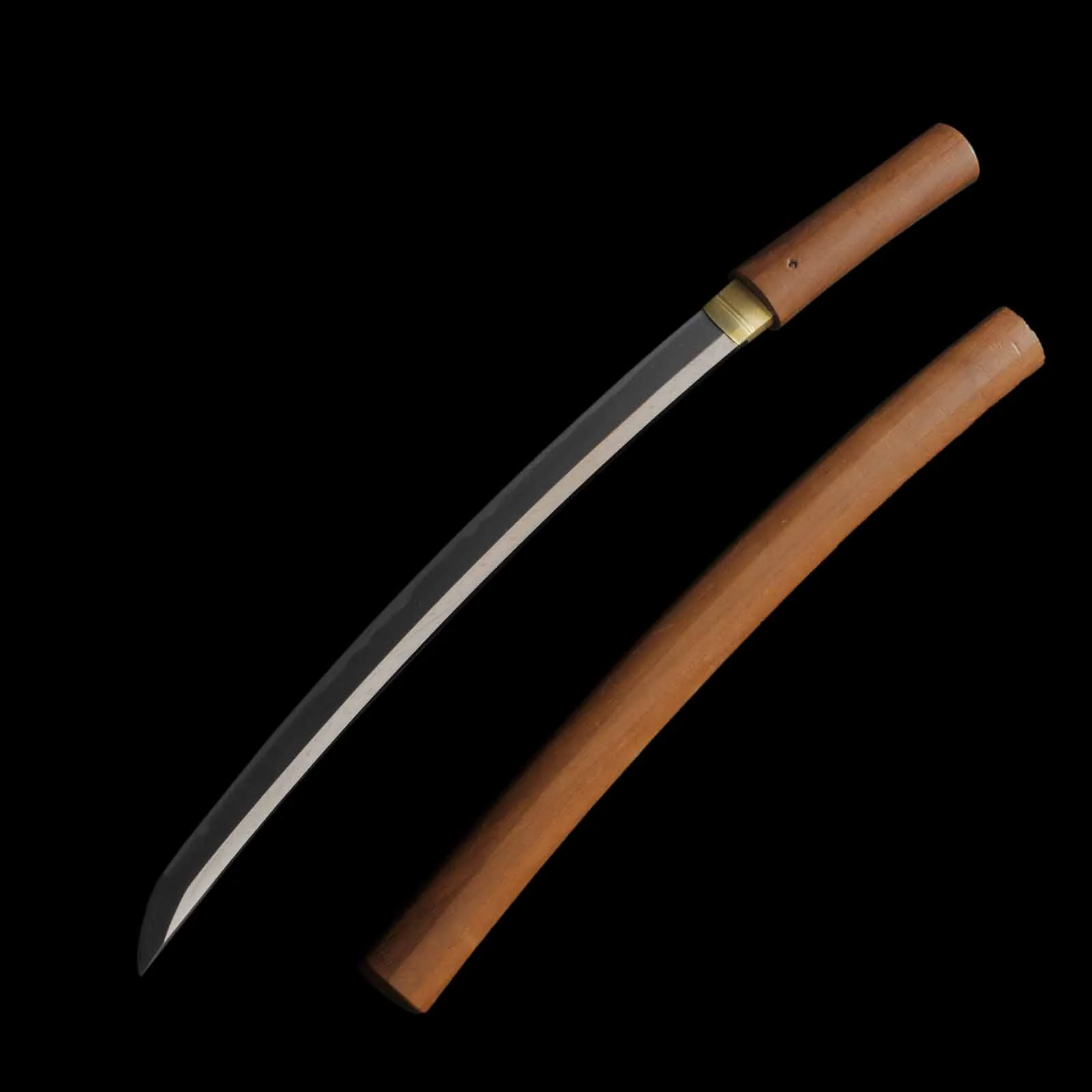
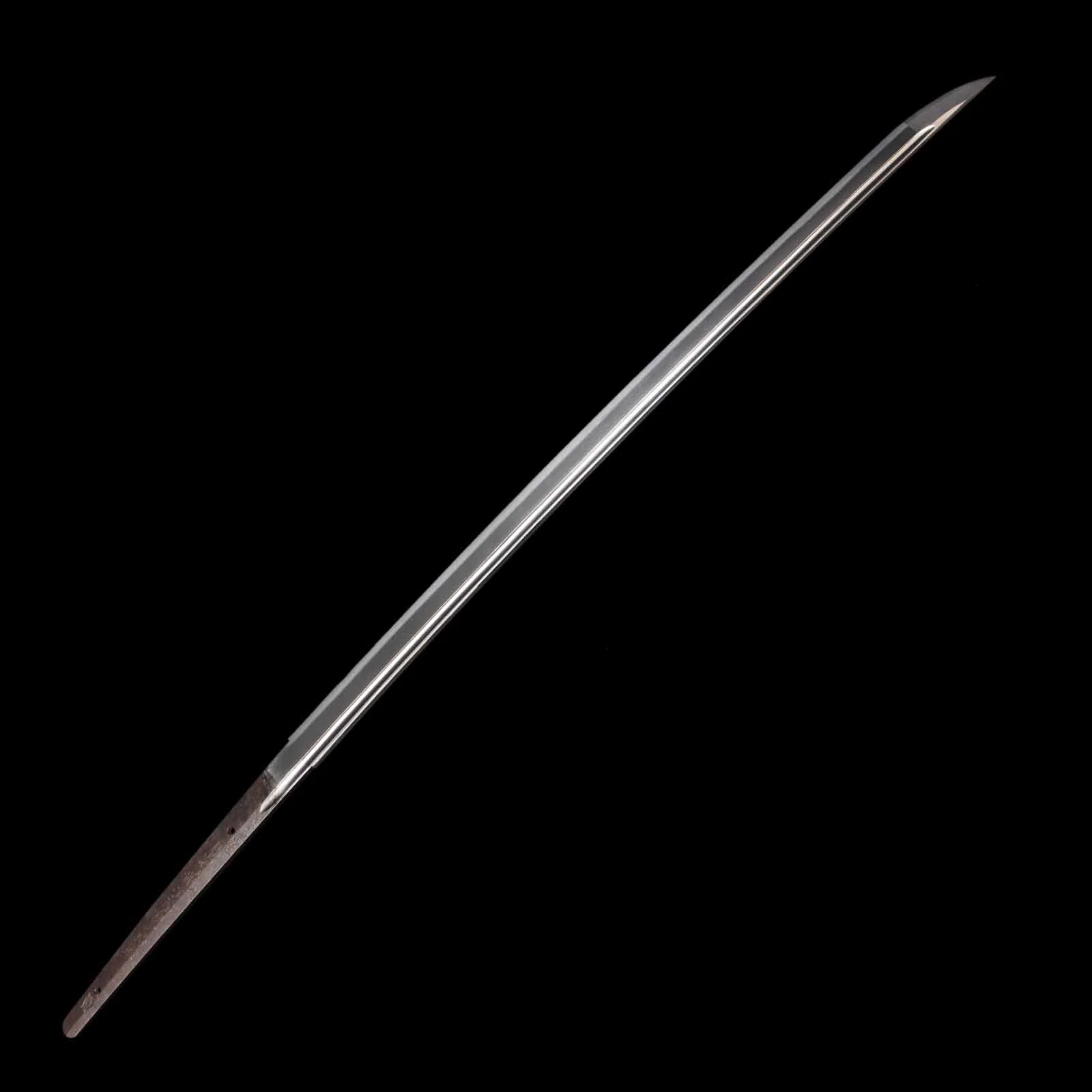
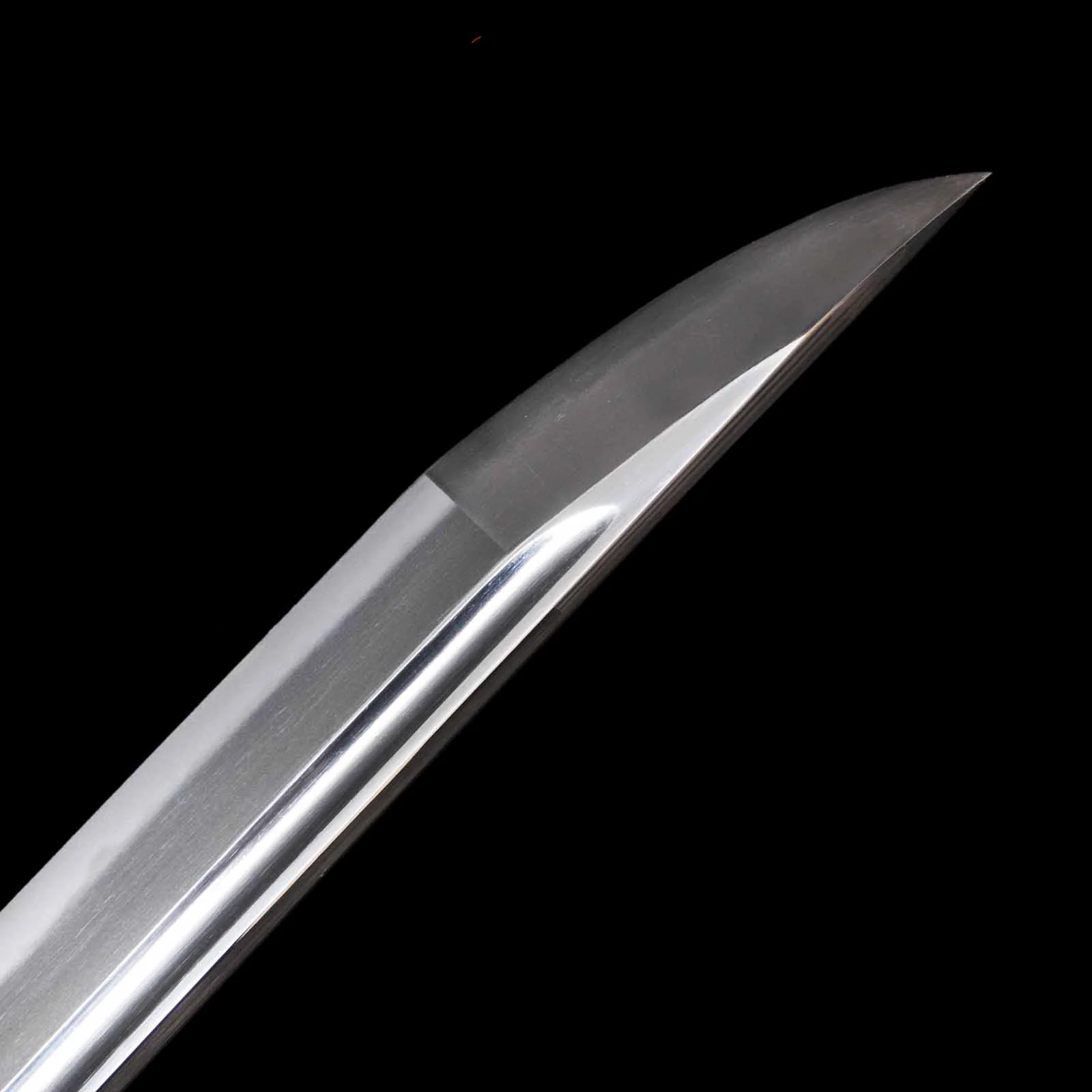
An impressive wakizashi of full length, in shinogi-zukuri with a well-proportioned form and elegant curvature. The jigane is a well-forged itame grain in which chikei — dark, glittering lines of activity in the steel — appear throughout, together with yubashiri, "running" patches of bright hardening that drift across the surface. It is a rich, active ground in the finest tradition of the Uta school.
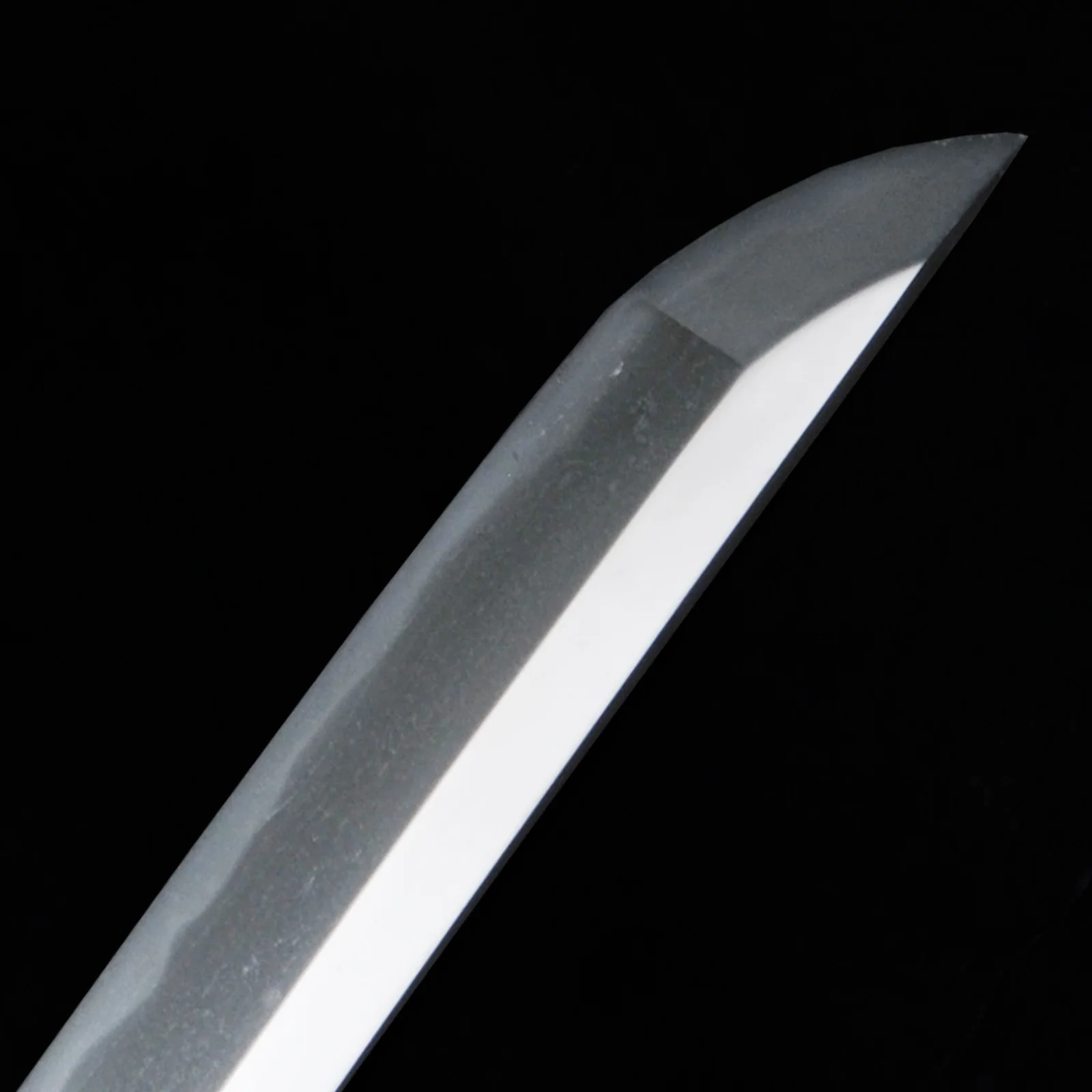
The hamon is the highlight of the blade: a highly individual midare temper that calls to mind the swell of great rolling waves — broad, surging undulations breaking along the edge — with a nioiguchi that is bright and tightly knit. Within the hardened edge, rounded pools of nie (tama, "beads") and bright kinsuji ("golden lines") run freely, giving the temper a restless, luminous life. The bōshi turns back at the point.
The blade is in outstanding condition: freshly polished and essentially flawless, with the workmanship of both steel and temper showing to superb effect. It is a blade that rewards close appreciation.
The signature
The blade is signed on the omote (front) face of the tang: Uta no Kunitsugu (宇多之国次). The nakago (tang) carries the even patina of age.
The blade is housed in a newly made wood shirasaya, wrapped with a protective covering sheet to guard the surface in transit and storage.
A signed, NBTHK-papered wakizashi from the historic Uta school of Etchū, in fresh polish and near-flawless health, distinguished by a wave-like hamon alive with tama and kinsuji over a chikei-laden ground — an outstanding study piece for the collector drawn to the swordsmiths of the northern provinces.
Specifications
- Type: Wakizashi (short sword)
- Signature (mei): Uta no Kunitsugu (宇多之国次), omote side
- School: Uta school, Etchū province (present-day Toyama)
- Period: Early Edo, Shintō era (c. Kan'ei–Kanbun, mid-17th c.)
- Jigane: itame with chikei throughout and yubashiri
- Hamon: bold wave-like midare, bright and tight nioiguchi, with tama and kinsuji in the edge
- Blade length (nagasa): 60.0 cm / 23.62 in
- Curvature (sori): 1.5 cm
- Width at base (motohaba): 30.3 mm
- Thickness at base (motokasane): 5.4 mm
- Width at tip (sakihaba): 18.9 mm
- Thickness at tip (sakikasane): 4.2 mm
- Weight (blade only): 500 g
- Construction: shinogi-zukuri
- Mounting: shirasaya (newly made, with protective wrapping)
- Certification: NBTHK Hozon Tōken
- Torokushō (Japanese registration) No.: Tokyo 321866

Details & Craftsmanship
Every detail has been carefully considered to bring you the perfect product.

Details & Craftsmanship
Every detail has been carefully considered to bring you the perfect product.

Details & Craftsmanship
Every detail has been carefully considered to bring you the perfect product.

Details & Craftsmanship
Every detail has been carefully considered to bring you the perfect product.

Details & Craftsmanship
Every detail has been carefully considered to bring you the perfect product.

Details & Craftsmanship
Every detail has been carefully considered to bring you the perfect product.

Details & Craftsmanship
Every detail has been carefully considered to bring you the perfect product.

Details & Craftsmanship
Every detail has been carefully considered to bring you the perfect product.

Details & Craftsmanship
Every detail has been carefully considered to bring you the perfect product.

Details & Craftsmanship
Every detail has been carefully considered to bring you the perfect product.
Description
Antique Japanese Wakizashi, signed Uta no Kunitsugu — NBTHK Hozon Tōken
Etchū Uta school · Early Edo period (Shintō), c. Kan'ei–Kanbun era
Accompanied by an NBTHK Hozon Tōken ("Sword Worthy of Preservation") certificate.
This large wakizashi bears the signature Uta no Kunitsugu (宇多之国次) and is accompanied by an NBTHK Hozon Tōken certificate, which papers it as a genuine work of the Uta school of Etchū province dating to the Shintō ("new sword") era — the certificate itself notes the "Shintō" classification, placing this blade in the early Edo period, around the Kan'ei to Kanbun eras (mid-17th century).
The Uta school of Etchū
The Uta school traces to a smith remembered as Ko-nyūdō Kunimitsu, who in the late Kamakura period moved from Uda district in Yamato province to Etchū (present-day Toyama), settling at Gousho Mikkaichi. He signed Uta to record his home district, and the name passed to the school he founded. From the Nanbokuchō period through the Muromachi era and on into the early Edo period, generations of Uta smiths — Kunifusa, Kunimune, Kunitsugu and others — worked in Etchū, making the school one of the great enduring swordmaking lineages of the northern provinces. The name Kunitsugu itself was carried by several smiths across these generations; this blade belongs to the school's Shintō-era work.
Workmanship and condition
An impressive wakizashi of full length, in shinogi-zukuri with a well-proportioned form and elegant curvature. The jigane is a well-forged itame grain in which chikei — dark, glittering lines of activity in the steel — appear throughout, together with yubashiri, "running" patches of bright hardening that drift across the surface. It is a rich, active ground in the finest tradition of the Uta school.
The hamon is the highlight of the blade: a highly individual midare temper that calls to mind the swell of great rolling waves — broad, surging undulations breaking along the edge — with a nioiguchi that is bright and tightly knit. Within the hardened edge, rounded pools of nie (tama, "beads") and bright kinsuji ("golden lines") run freely, giving the temper a restless, luminous life. The bōshi turns back at the point.
The blade is in outstanding condition: freshly polished and essentially flawless, with the workmanship of both steel and temper showing to superb effect. It is a blade that rewards close appreciation.
The signature
The blade is signed on the omote (front) face of the tang: Uta no Kunitsugu (宇多之国次). The nakago (tang) carries the even patina of age.
The blade is housed in a newly made wood shirasaya, wrapped with a protective covering sheet to guard the surface in transit and storage.
A signed, NBTHK-papered wakizashi from the historic Uta school of Etchū, in fresh polish and near-flawless health, distinguished by a wave-like hamon alive with tama and kinsuji over a chikei-laden ground — an outstanding study piece for the collector drawn to the swordsmiths of the northern provinces.
Specifications
- Type: Wakizashi (short sword)
- Signature (mei): Uta no Kunitsugu (宇多之国次), omote side
- School: Uta school, Etchū province (present-day Toyama)
- Period: Early Edo, Shintō era (c. Kan'ei–Kanbun, mid-17th c.)
- Jigane: itame with chikei throughout and yubashiri
- Hamon: bold wave-like midare, bright and tight nioiguchi, with tama and kinsuji in the edge
- Blade length (nagasa): 60.0 cm / 23.62 in
- Curvature (sori): 1.5 cm
- Width at base (motohaba): 30.3 mm
- Thickness at base (motokasane): 5.4 mm
- Width at tip (sakihaba): 18.9 mm
- Thickness at tip (sakikasane): 4.2 mm
- Weight (blade only): 500 g
- Construction: shinogi-zukuri
- Mounting: shirasaya (newly made, with protective wrapping)
- Certification: NBTHK Hozon Tōken
- Torokushō (Japanese registration) No.: Tokyo 321866